.png)
.svg)



.jpg)
Features
May 14, 2026
Are You Scared Of Being Replaced By AI?




10 Feb 26
Currently, most D2C brands treat GA4 data as the ‘single source of truth’. Dashboards are looking clean. Events are firing, and reports are updating in real time. Yes, despite all this “clarity”, many CMOs and marketers feel something is off. The reasons are:
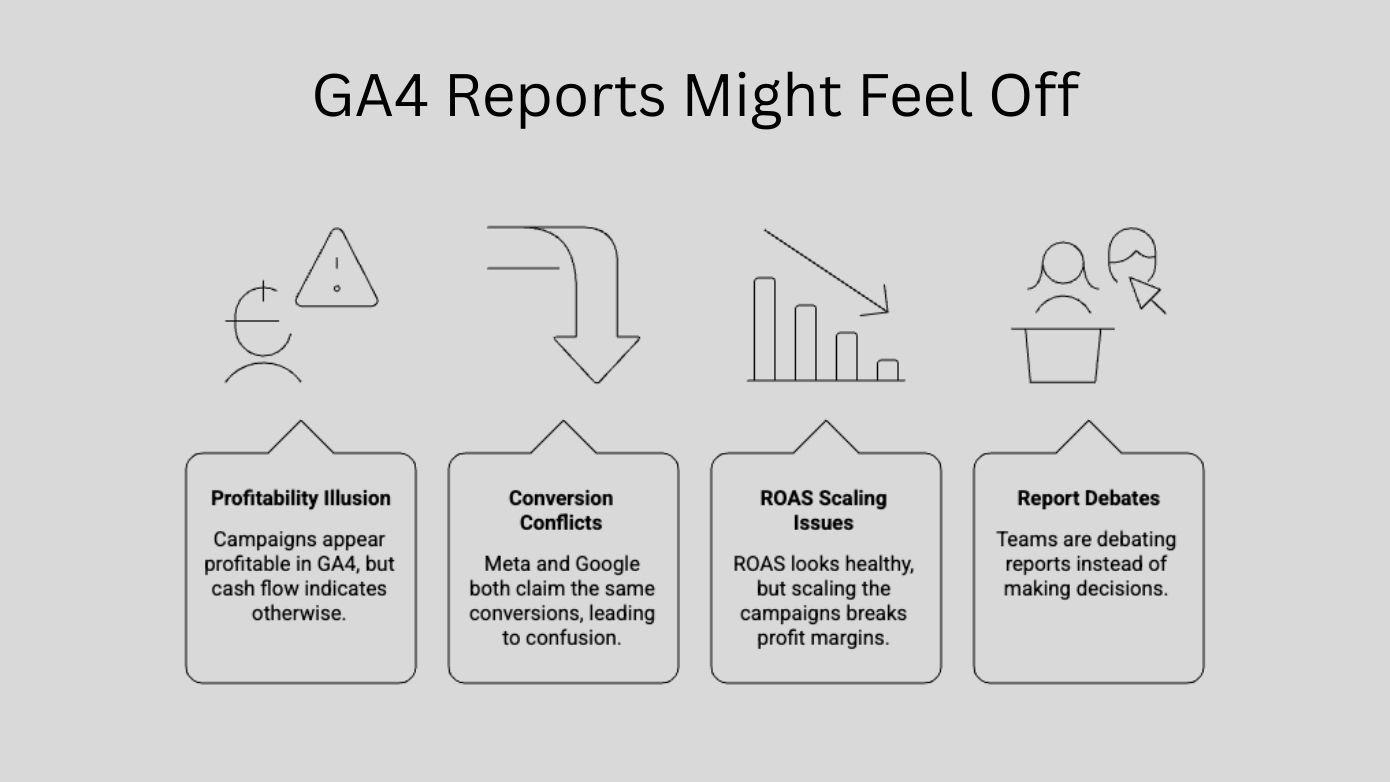
If all these mentioned problems sound familiar to you, then you are stuck. And, the problem isn’t your team or your marketing strategy. It’s your analytics stack. This blog breaks down the hidden gaps in GA4 data and what performance-driven brands are doing differently.
The challenges discussed below primarily apply to the standard (free) version of Google Analytics 4, which is what most D2C brands use today.
Google does offer GA4 360, its enterprise version. It addresses some of these limitations. However, its pricing and implementation complexity make it inaccessible for many scaling brands, often costing six figures annually before full adoption.
As a result, most teams operate in a reality where:
GA4 is necessary but not sufficient for performance decision-making.
Before we begin and look into attribution, journeys, or profitability, there’s a spoiler for you. It’s a major issue but often overlooked by most teams.
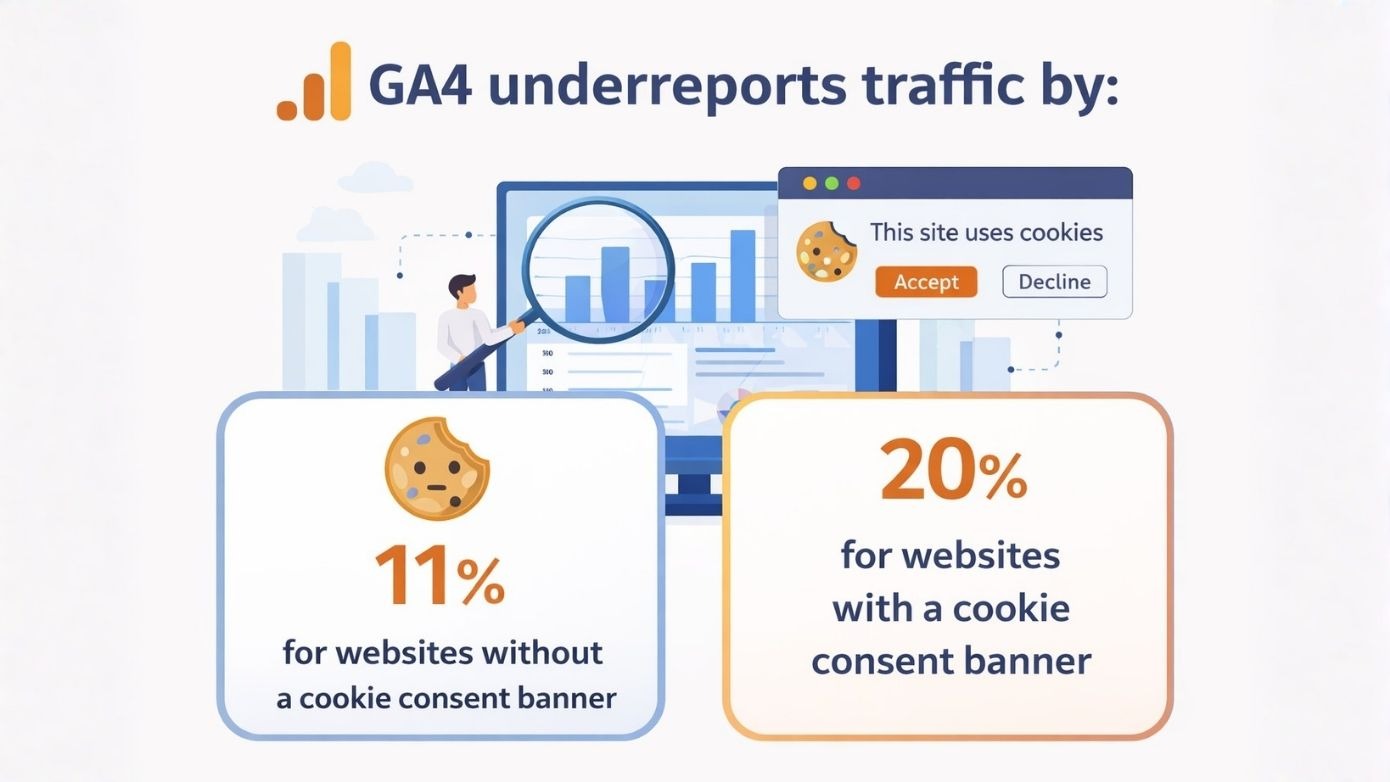
According to Orbit Media Studios, GA4 underreports traffic by:
What does this mean? This means a major portion of user behavior is never captured in the first place. Understanding user behaviour is very important for turning them into a customer and giving personalized services. As per a Forbes study, 81% of customers prefer companies that give a personalized experience.
So when advertisers are debating decimals in ROAS or CAC inside GA4, they don’t realise that they’re often arguing over incomplete data. And yet, GA4 is still widely used and considered the benchmark for making decisions. Why is that so? Let’s look at the reasons now.
Let us understand why Google Analytics is still dominant in decision-making and is popularly preferred by marketers:
“The real challenge for modern CMOs isn’t accessing data, it’s trusting it. When growth decisions are powered by fragmented attribution and modeled assumptions, leadership teams end up optimizing dashboards instead of business outcomes. Currently, clarity is not a luxury; it’s a prerequisite for sustainable growth.”
~ Dhaval Gupta, Managing Director, Cyber Media
GA4 is an excellent traffic and behavioral analytics tool.
But traffic analytics and performance analytics are not the same thing.
And if you want to make smart decisions and better growth, then you have to understand the distinction between the two. Read on for a deeper dive into this difference.
GA4 is excellent at explaining user activity, but growth decisions require more than activity metrics. GA4 excels at answering questions like:
But you need answers to:
This is where the cracks in GA4 data start to show. Here are the five major gaps in GA4 data analytics and how you can identify and solve them .
Firstly, GA4’s attribution system is designed for behavioral tracking, not for resolving cross-platform performance conflicts. Even with data-driven attribution enabled, Google-owned channels benefit from deeper native integrations. On the other hand, non-Google platforms rely more heavily on modeled or partial data.
As a result:
The issue isn’t inaccurate data, it’s fragmented truth. So when you wish to know “Which channel actually drove the sale?”, you are left with multiple versions of “truth”. This confusion isn’t unique.
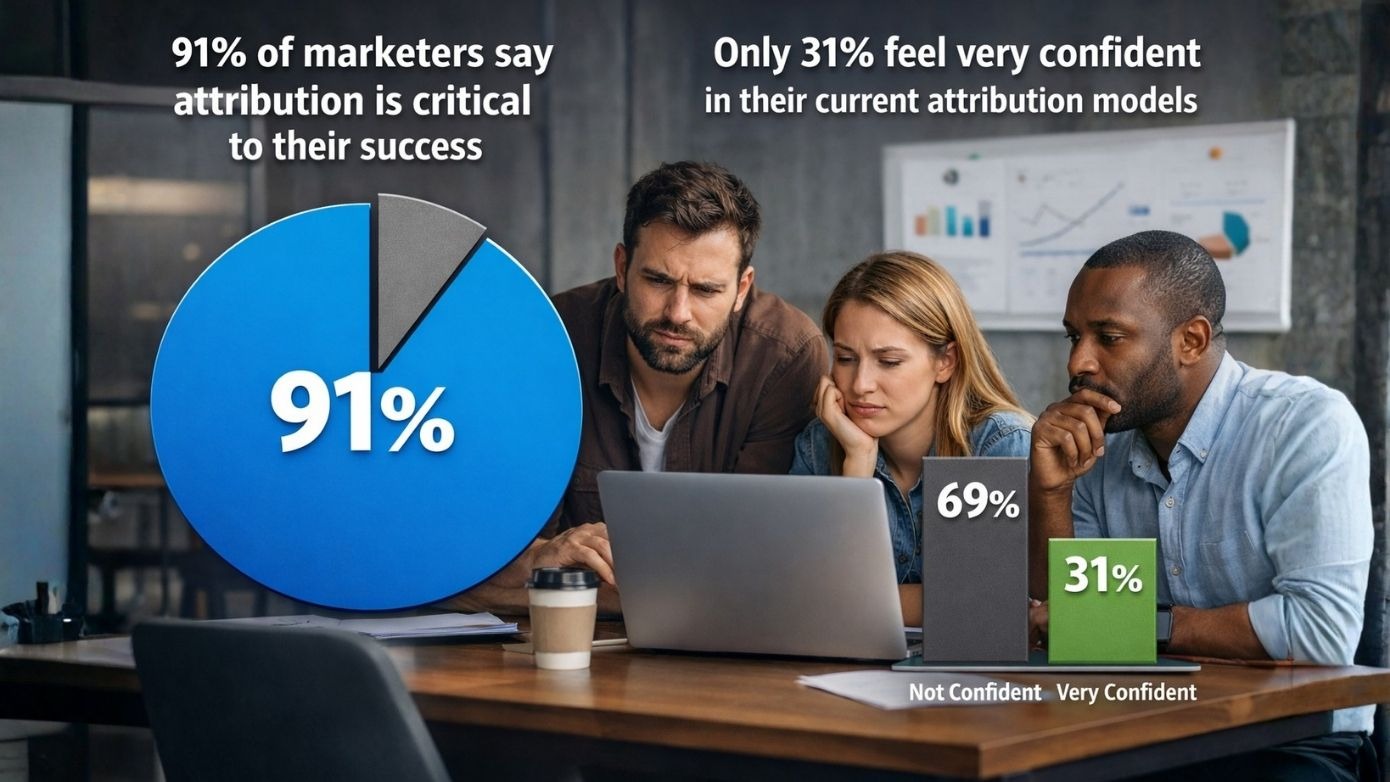
In fact, Marketing LTB reports that 91% of marketers say attribution is critical to their success. However, only 31% feel very confident in their current attribution models.
Everyone knows attribution matters, but very few trust what they’re seeing. The result? Budget misallocation, channel bias, and stalled growth. Therefore, advertisers end up scaling what looks good in one report, not what’s truly profitable. This will be costly for your business and will lead to marketing data silos that will hurt your ROI.
The best move for reducing attribution confusion is to do away with platform-level attribution and adopt a unified performance lens. Stop asking “Which platform claims the conversion?”, instead “How did this conversion actually happen across channels?” You should:
You can still use GA4 data as a behavioral input, but performance decisions should rely on cross-platform attribution logic. This will remove bias and align spend with real outcomes. This shift helps teams allocate budgets based on profitability instead of fragmented reporting signals.
GA4 data shows “What” happened, not “Why”. GA4 analytics focuses on discrete events like page views, add to cart, and purchases. This vent-level visibility is useful, but it fails to explain how and why conversions are actually happening.
Customer journeys are rarely linear. Sprinklr states that usually it takes around 6 to 8 touchpoints for a B2B customer to convert and 3 to 5 for B2C. So, one single purchase often involves multiple touchpoints across days or even weeks. It may include:
Here lies the problem with GA4. It records these interactions in isolation, not as a connected story. What you don’t get:
Gartner survey shows that 83% of businesses struggle to use customer journey maps to identify and prioritize CX efforts. Data analysis tools like GA4 don't give you the necessary context and insights required for making smart decisions.
Without this context, your optimisation will merely become guesswork. You will adjust creatives, bids, and landing pages based on surface-level metrics, not real influence. When you don’t know why a user converted, every optimization decision will be made in the dark. This will slow down growth and increase waste spend, where every penny counts.
Event tracking alone doesn’t explain conversion behavior. If you want to understand why users convert, focus on journey-level analysis, not isolated actions. Advertisers should:
There’s no doubt that GA4 analytics is useful for capturing events. However, influence becomes clear only when events are stitched together into journeys. Without this context, your optimization decisions might be based on surface metrics rather than meaningful customer behavior.
By now, you’ve learned that GA4 is an event-based system. Even when GA4 captures and reports user behavior accurately, it fails to translate that behavior into business economics. And, D2C brands win by optimizing profitability, not events. They win on economics.
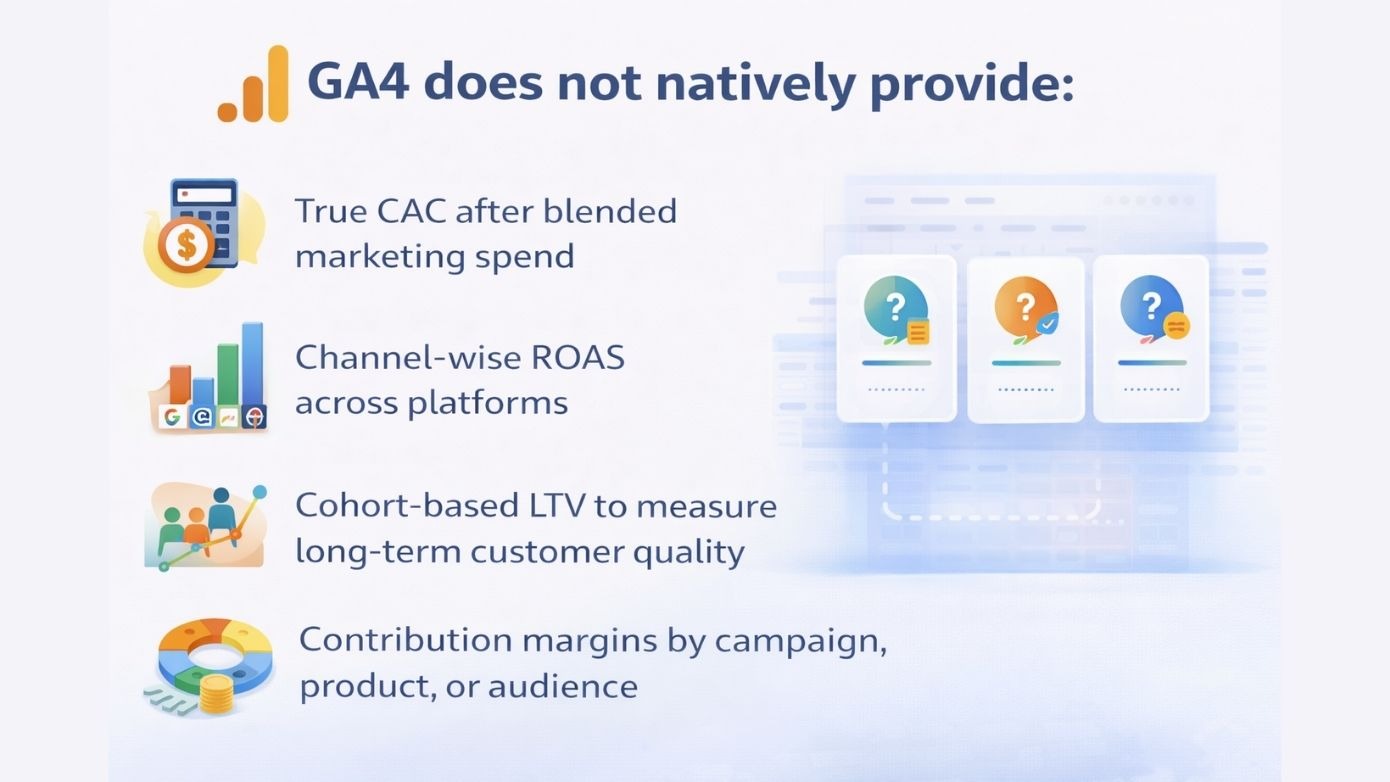
GA4 does not natively provide:
Teams can attempt to solve these gaps by using custom dimensions, manual exports, spreadsheets, or Looker Studio. However, these methods heavily rely on manual reporting and assumptions. These methods won’t give precision, and data definitions will vary. The result will be errors compounding over time. Hence, modern marketers need to stop using manual reporting.
Estimated profitability is dangerous. Small inaccuracies in CAC or ROAS can lead to significant misallocation of spend. Estimating profitability instead of measuring is disastrous. The end will be decisions becoming reactive rather than strategic.
Gartner estimates that poor data quality costs businesses around $15 million per year, and yet 60% of businesses don’t even measure the cost of having bad data. Without native visibility into unit economics, your data will be the half-truth. GA4 analytics encourages brands to scale what looks active, not what’s truly profitable.
Activity metrics like clicks, sessions, and conversions are incomplete without economic context. For those wanting sustainable business growth, they must prioritize profitability-first metrics over engagement signals. To close this gap, teams:
Always remember that decisions grounded in unit economics reduce waste and help you scale sustainably.
GA4 is fundamentally a reporting platform. It can show what changed: traffic spikes, conversion drops, engagement shifts. But falls short when it comes to answering the question: what should we do next?
GA4 does not prioritize issues, quantify business impact, or recommend actions. It presents metrics and charts, then leaves interpretation to you. If you and your team are managing multiple channels, regions, and budgets, then this might create a critical bottleneck. Insights live inside dashboards, while decisions rely on debates, assumptions, and past experience.
As a result, optimization becomes reactive. Teams start responding to visible fluctuations rather than focusing on the highest-leverage opportunities. Even if the data is accurate, execution slows down.
Reporting alone does not create impact. Modern teams need analytics that help prioritize action, not just display trends. High-performing organizations achieve impact by:
GA4 data is descriptive by design. To move faster, you and your teams must pair reporting with structured analysis that answers: What should we fix? What should we scale? What can we safely ignore?
The fifth hidden gap is the most dangerous yet least discussed limitation of GA4 data. That’s why this section is divided into one more sub-section. First, no one questions: how much of GA4 data is not directly observed?

GA4 records data only when its JavaScript (gtag.js) successfully communicates with cookies on a user’s device. When that interaction fails, no data is captured at all. This happens more often than most teams realize due to:
As privacy adoption grows and Google Cookiepocalypse keeps increasing, these gaps continue to widen in GA4 data. To compensate for gaps, Google Analytics 4 relies heavily on statistical modeling. Yes, you read it right. GA4 fills gaps using statistical modelling to estimate missing traffic and conversions.
On the surface level, this keeps reports looking complete, but in reality, it introduces a silent layer of assumptions. Here’s what GA4 doesn’t clearly communicate:
This creates a huge hidden risk for advertisers. Modeled data may smooth trends, but it can also inflate or deflate channel performance. Additionally, it can mask tracking failures and create false confidence in ROAS and conversion numbers. The problem lies not with the modelling itself but with the lack of transparency around it.
There’s another layer to the fifth hidden gap problem that compounds the risk. GA4 is deliberately designed to be privacy-first. This means that it relies on pseudonymous, aggregated user identifiers. A brand should have an advanced User-ID and consent-led setup. Otherwise, GA4 will struggle to consistently connect the same customer across devices, sessions, and channels.
This creates three critical blind spots:
What it means for you:
Anonymized identity + consent-driven data loss + heavy modeling = blurred vision of reality
This aligns with the findings from Orbit Media Studios as well, mentioned at the beginning of the blog. A meaningful portion of your customer behavior and customer value is never fully visible. This matters deeply for making insightful decisions.
The solution for resolving both the problems discussed in hidden gap 5 is treating GA4 data as a directional signal, not a final source for decision-making. Privacy restrictions will continue to evolve. To manage missing data or statistically modeled data of GA4, teams must:
At this point, one thing should be clear: clean GA4 reports do not guarantee good decisions. GA4 dashboards often look accurate, update in real-time, and align internally. But accuracy does not imply completeness. All five hidden gaps show that GA4 data lacks context and clarity.
In 2026, modern advertisers and CMOs need analytics systems that go beyond surface-level reporting and provide:
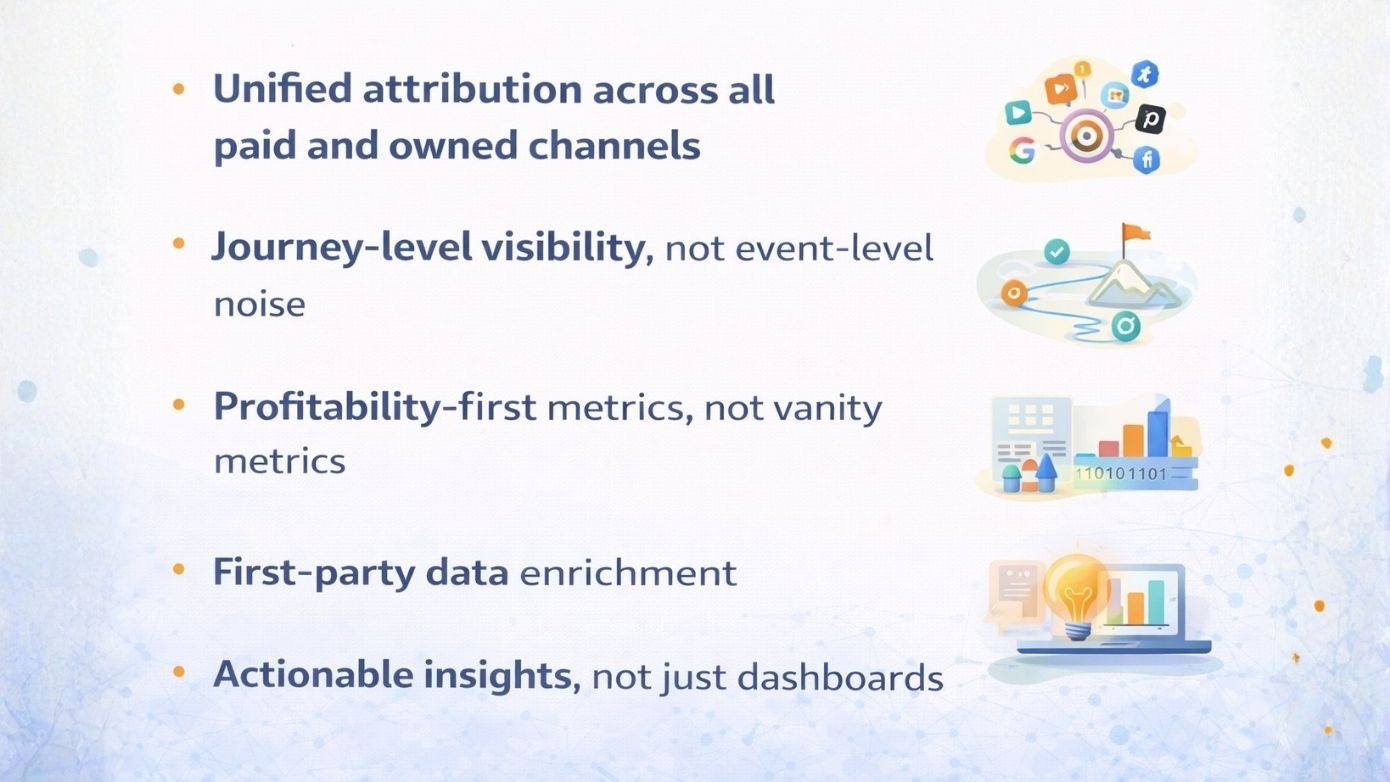
This is why performance-driven brands are no longer asking, “Is GA4 accurate?”
They’re asking, “Is GA4 enough?”
For most scaling brands, the answer is no.
Modern D2C brands don’t need another analytics tool, but a performance intelligence layer. Something that unifies data, explains impact, and guides decisions. This is where CMGalaxy comes in.
Hands down, GA4 still has high value as a traffic and behavioral tracking layer. But you might not want to rely on it for making growth decisions. CMGalaxy is built for helping you with that. It sits above GA4, fixing what it can’t.
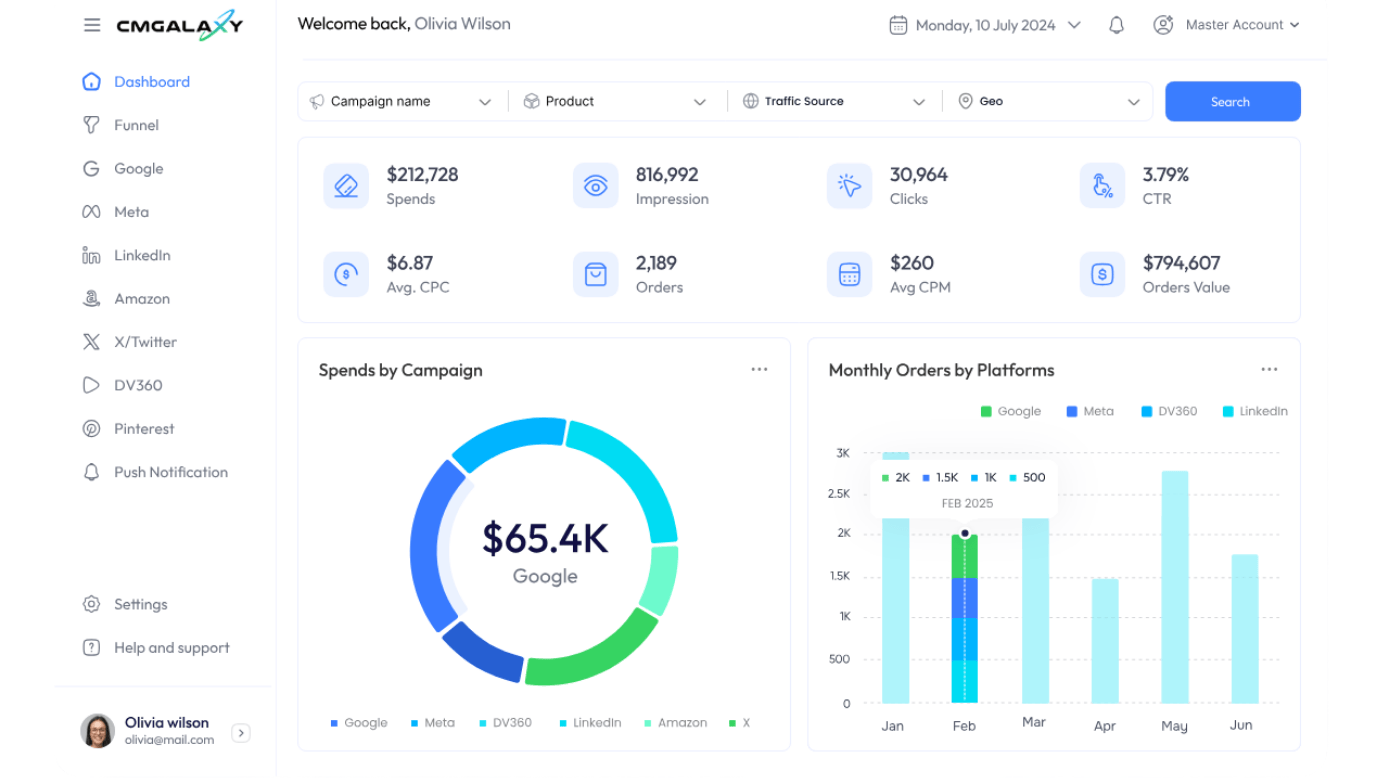
Don’t mistake CMGalaxy as another dashboard. It’s a modern performance analytics platform built for scaling D2C brands. CMGalaxy functions as:
Let’s be clear. GA4 isn’t bad. It’s just incomplete. It isn’t lying maliciously. It’s simply doing what it was built to do:
But modern D2C growth requires more. CMGalaxy gives you that edge by providing:
In short:
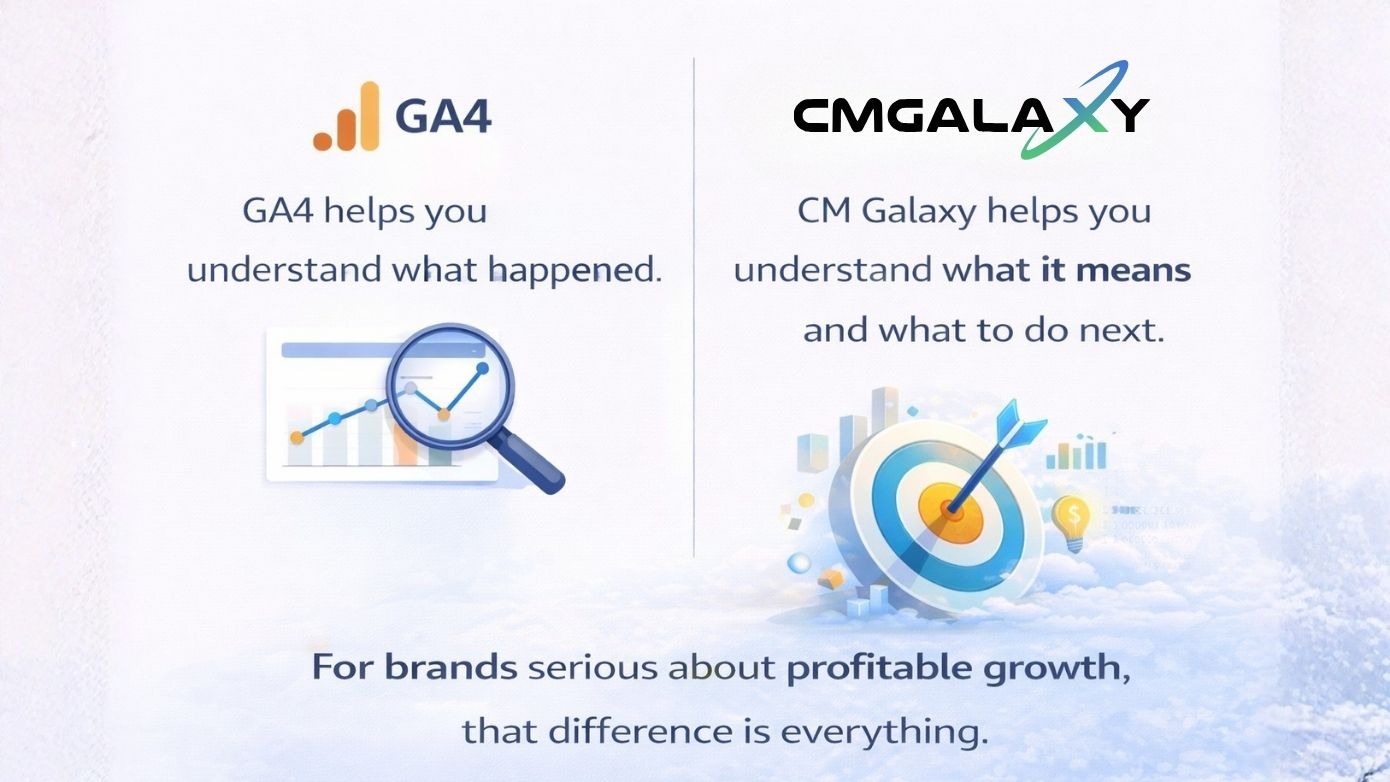
GA4 helps you understand what happened.
CMGalaxy helps you understand what it means and what to do next.
For brands serious about profitable growth, that difference is everything.
“CMGalaxy was created to help CMOs move from measurement to leadership. By unifying attribution, profitability, and customer journeys into one performance intelligence layer, it gives decision-makers the confidence to scale what truly works, without second-guessing the data behind every move.”
~ Dhaval Gupta, Managing Director, CyberMedia
Don’t blindly trust GA4 data. The context matters a lot for making sustainable growth decisions. For advertisers and CMOs, the goal isn’t more data. It’s better decisions. GA4 data without context leads to:
The brands winning today don’t replace GA4. They go beyond it.
Want to See the Full Picture? Are you tired of fragmented reports and conflicting attribution? Are you troubled by unclear performance narratives? Then it’s time to rethink how you analyse growth.
Explore CMGalaxy, a performance-first analytics platform built for modern D2C brands.
For more insights on fixing broken marketing data and building a unified growth engine that actually scales profitably, keep visiting our blog section.
1. Why is GA4 data not always reliable?
GA4 data is often incomplete because of cookie consent loss, ad blockers, and privacy restrictions. Google Analytics 4 also uses modeled data, which can hide attribution gaps and distort true performance, Thus, it is unreliable as a single source of truth for D2C growth decisions.
2. What is the main limitation of Google Analytics 4?
The main limitation of Google Analytics 4 is that it tracks traffic and events, not profitability. It cannot natively measure true CAC, blended ROAS, cohort-based LTV, or contribution margins. These are the key metrics required for performance analytics.
3. How accurate is GA4 analytics attribution?
GA4 analytics attribution is only partially accurate. It favors Google-owned channels and relies on modeling for non-Google platforms. This leads to overlapping conversion claims and unclear insights into which channel actually drove the sale.
4. What is CMGalaxy and how is it different from GA4 data?
CMGalaxy is a performance analytics platform built for D2C growth decisions. Unlike GA4 data, it does not rely on event tracking or modeling. CMGalaxy unifies marketing, commerce, and first-party data to deliver accurate attribution, profitability metrics, and clear, actionable insights.
5. Should D2C brands rely only on GA4 data?
No. GA4 data alone is not enough for scaling D2C brands. While Google Analytics 4 tracks user behavior, brands need a performance analytics layer like CMGalaxy to measure true profitability, attribution, and long-term customer value.
Assistant Content Manager with 4+ years of experience in the EdTech domain, now passionate about educating people on MarTech. I specialize in blending storytelling and research to create impactful, human-centered content.


Copyright © 2025 CMGalaxy | All Rights Reserved.


