.png)
.svg)



.jpeg)
.jpeg)


.jpg)
Features
August 24, 2026
Ideal Customer Profile Bucketing: Do You Really Know Your Audience?



27 Jan 26
Earlier, enterprise giants used to treat programmatic advertising like a secret weapon. But the situation is not the same anymore. The marketing and advertising domain has shifted and become more welcoming for everyone.
Programmatic advertising is no longer a secret weapon reserved for enterprise giants. Let’s be real - it is democratizing how marketers and advertisers reach audiences. Whether it's a small startup or a local business, everyone is now using this powerful method.
Digital channels are growing more and more complex, and with each passing day, programmatic advertising is becoming the backbone for effective digital campaigns. Particularly, if you are in a lean team or leading one, then you can’t afford to ignore programmatic advertising solutions for your business.
In this blog, you will understand various problems with traditional media buying that gave rise to programmatic advertising and why it is beneficial, especially for small businesses.
Manual media buying has always been a roadblock for small teams. The current marketing and advertising domain is very competitive and dynamic. To gain an edge in such a volatile domain, it's essential for teams to be fast, accurate, and more efficient.
Manual or traditional media buying revolves around securing placements through one-on-one negotiations. It involves multiple publishers, constant emailing, and manual insertion orders. All these steps can sap limited resources and slow teams down.
Let’s look at how manual media buying slows down small teams in a little more detail:
Each and every marketing campaign can take weeks. Teams have to prepare for various briefs and launches. Proposals, negotiations, and insertion orders bounce back and forth between advertiser and publisher.
If there’s any requirement to update creative or shift budget mid-campaign, then it can mean starting the cycle anew. Such requirements can cause frustrating delays and make campaigns less responsive to market changes.
Small and mid-sized businesses (SMBs) have to juggle campaigns across different platforms like print and digital media. Each of these platforms works in isolation with different metrics and timelines. This situation leads to marketing data silos and reduces ROI.

As per statistics, 47% of marketers consider data silos as the biggest challenge and find it extremely difficult to see a full, clear picture. Furthermore, manual tracking and reporting add to the problem by introducing errors and double-work. This leads to wasted hours that small businesses and teams simply can’t spare.
Waste ad spend is another critical problem. Every dollar matters for SMBs. Marketing teams that use manual media buying often end up using broad and non-targeted approaches like the infamous “spray and pray”.
The approach means showing ads to everyone and hoping someone relevant will see it. They spend limited budgets on audiences who may never become customers. Many small and medium enterprises (SMEs) lack access to premium inventory and strong negotiating positions. And, the result is overpaying for placements or missing out on high-impact opportunities.
One real-life case is of the American MNC giant Procter & Gamble. In 2018, the company decreased its digital spending by $200 million. They were using spray-and-pray type of campaigns and found them ineffective. These campaigns were leading to wasted impressions rather than meaningful engagement or conversions.
In manual media buying, teams often rely on instincts and a handful of relationships. The decisions are made on gut feeling rather than data. It leads to cognitive biases, and campaigns might reflect “what worked last quarter” rather than what’s working today. The budget might not be divided properly among ads, and this inaccurate allocation will cost you heavily.
Over time, human bias reinforces outdated strategies instead of adapting to changing markets and customer behavior. Limited data further adds to the problem, and you’ll experience inefficient spending and slow optimization.
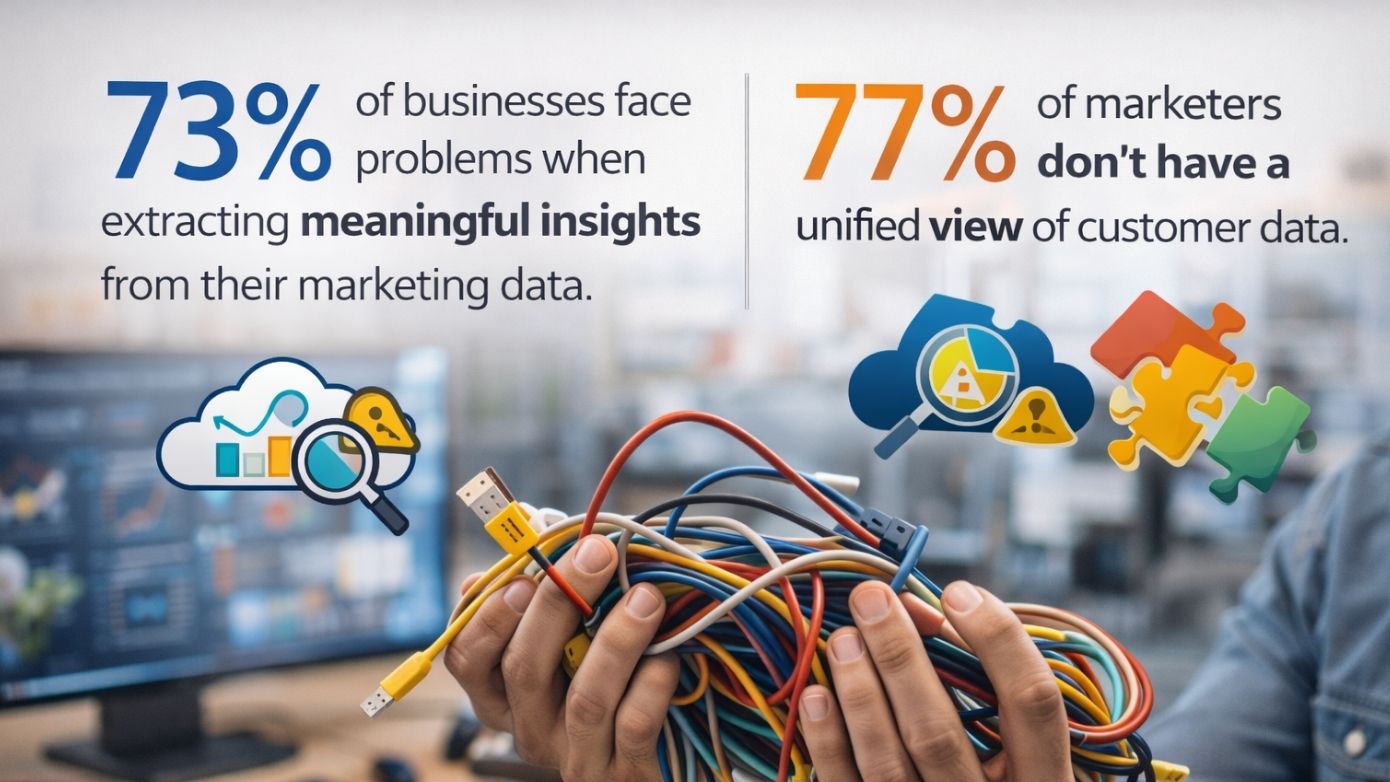
As per data, 73% of businesses face problems when extracting meaningful insights from their marketing data, and 77% of marketers don’t have a unified view of their customer data. The cumulative effect of limited data will be missed growth opportunities and reduced ROI.
Another significant drawback of manual media buying is that it often restricts advertisers to traditional or familiar placements. Many high-growth channels, like Connected TV (CTV) and streaming platforms, are not easily accessible through manual negotiations. In-app and mobile inventory, along with other emerging digital formats, can not be accessed as well.
Therefore, small teams are locked out from where modern audiences actually spend time. Meanwhile, their competitors will reach customers across newer and high-engagement environments. This isn’t about cost or speed; it’s about missing entire channels altogether.
Programmatic advertising makes your every dollar count. It uses AI, bidding (RTB), and data analytics to automate every stage of digital media buying. It analyzes profiles of different audiences and optimizes bids instantly. At its core, programmatic advertising is all about:
As per Statista, global programmatic ad spend was around $595 billion and is expected to reach around $800 billion by 2028. Hence, if you are aiming for precision targeting, scale, and efficiency-based buying and selling of media, then programmatic advertising is your best solution.
Previously, programmatic advertising was seen as expensive and overly complex, but it is now accessible for organizations of all sizes. For small businesses and teams, it is particularly more beneficial in the following ways.
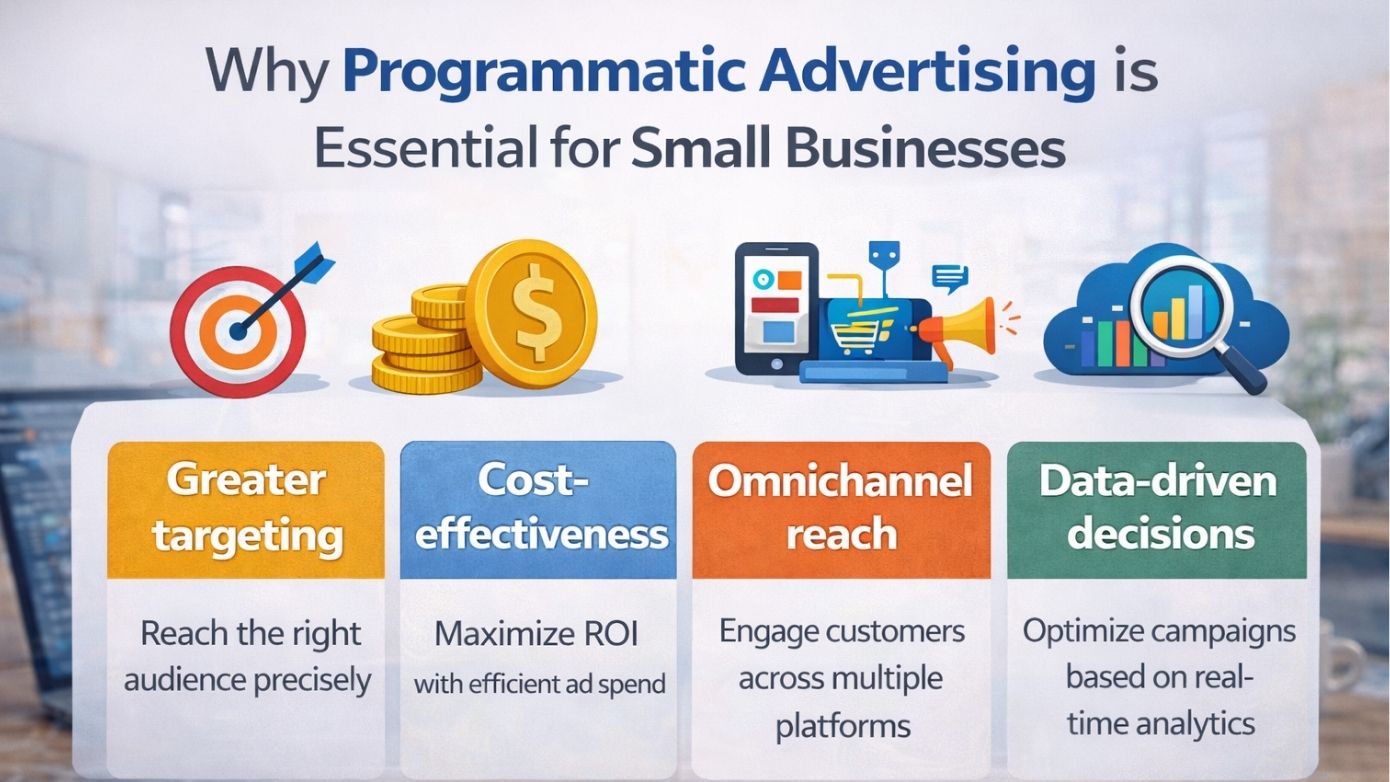
Programmatic advertising helps your business by delivering measurable value for every dollar and subsequently higher ROI. The next section deals with major components of programmatic advertising and their market growth.
Programmatic marketing does not operate in isolation. It works through a connected ecosystem of platforms. These platforms automate, optimize, and scale digital media buying in real time. Each component in this ecosystem works harmoniously and plays a critical role in ensuring ads reach the right audience.
This side deals with advertisers and marketers who manage their campaigns. As per Allied Market Research, the DSP system market was valued at $21 billion in 2022 and is expected to reach $228.4 billion by 2032. The market is growing at a CAGR of 27.3% from 2023 to 2032.
Through a DSP, teams set budgets and define targeting parameters such as demographics, interests, location, or behavior. Afterwards, they upload creatives and place bids on ad impressions across thousands of websites and apps. DSPs use algorithms and AI to decide how much to bid for each impression in real time, ensuring cost efficiency and performance optimization.
These platforms are used by publishers to manage and monetize their ad inventory. Emarketer estimates that by 2026, around 90% of all digital ads will be sold via SSP programmatic channels globally.
SSPs allow publishers to minimize prices and control which ads appear on their properties. They can maximize revenue by exposing inventory to multiple buyers simultaneously. This ensures publishers sell impressions at the best possible value.
In simple words, ad exchanges are high-speed digital marketplaces where DSPs and SSPs connect. Here, the auction happens in milliseconds. Let’s understand this with a simple example.
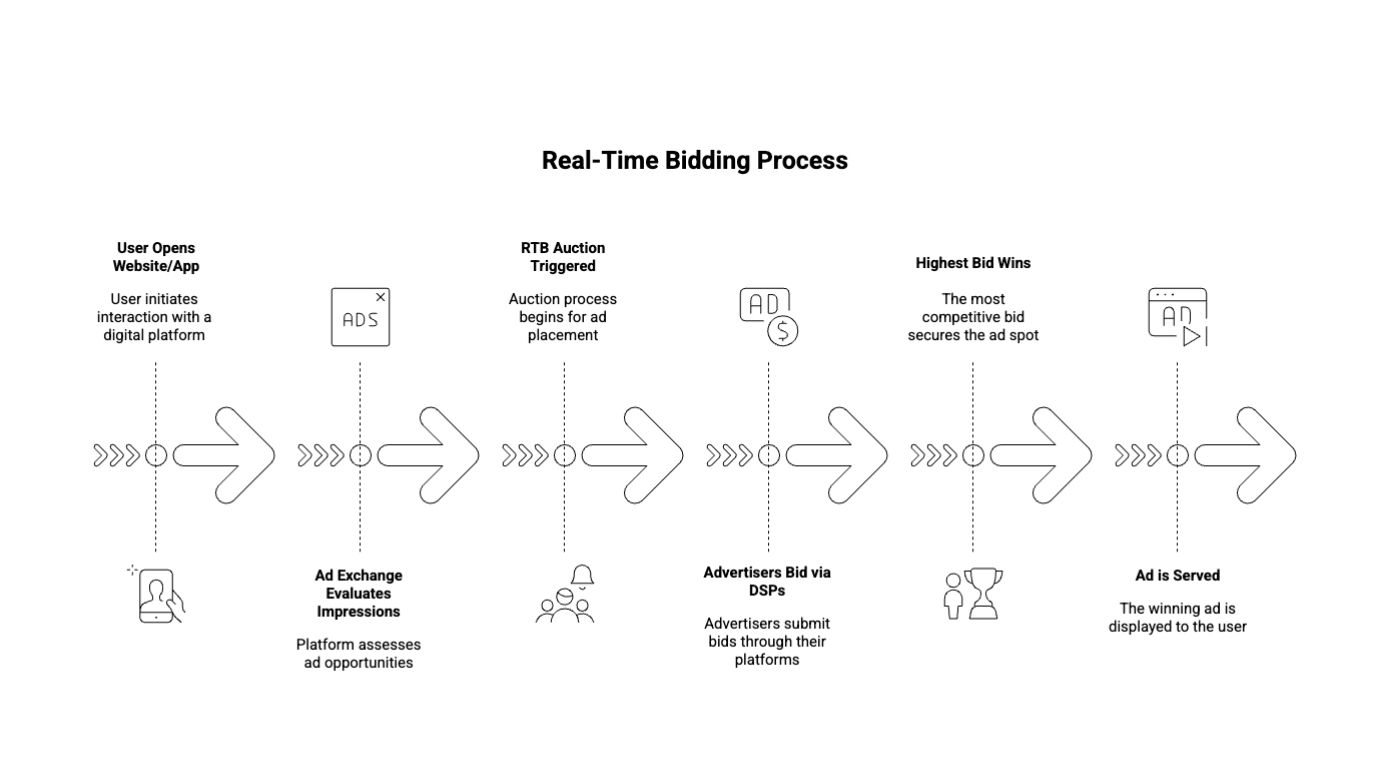
This automated process ensures fair competition and price transparency. It also provides optimal value for both advertisers and publishers. Meanwhile, it enables ads to be delivered to the most relevant users at the right moment.
The Virtue Market Research highlights that the global ad exchange software market was valued at $207.12 billion and is expected to reach $814.25 billion by 2030. The market is expected to grow at a CAGR of 21.6% during the forecast period of 2024-2030.
Data Management Platforms centralize and organize large volumes of audience data. The data is collected from first, second, and third-party sources. In fact, first-party data is quickly becoming the new marketing gold as the Google Cookiepocalypse is approaching the MarTech domain.
DMPs transform raw data into actionable insights. These platforms create detailed audience segments based on behavior, interests, demographics, and intent signals. These segments are then used for advanced targeting, retargeting, and lookalike modeling across programmatic campaigns.
DMPs continuously update audience profiles, which helps advertisers deliver more personalized and relevant ads. This improves campaign performance and reduces wasted spend. With the help of DMPs, small teams can make smarter and data-driven decisions at scale.
Talking about global DMP market growth, Grand View Research states that the market was valued at around $ 2.52 billion in 2024 and is expected to reach $7.02 billion by 2033. The growth is happening at a CAGR of 12.2% from 2025 to 2033.
Programmatic advertising isn’t about “one size fits all.” It provides many buying methods so that you can choose what fits you the best. Consider your goals, budget, and level of control before choosing any method. Major types include:
No technology is perfect. Every technology brings new opportunities as well as certain risks. Programmatic advertising is no exception. In this part of the blog, you’ll learn about some of the main drawbacks of programmatic advertising. You’ll also learn about solutions to these problems and how advertisers can choose a middle way.
Ad fraud remains one of the biggest challenges in programmatic advertising. According to Exchange4Media, global ad fraud was $88 billion in 2023, and it is expected to reach $172 billion by 2028. Bots, fake websites, and invalid traffic (IVT) can generate false impressions, clicks, or conversions.

These fraudulent activities drain budgets without delivering real business value. It will hamper performance metrics and overall optimization. Fraud is especially damaging for small teams with limited spend.
Solution: Advertisers should work with trusted programmatic platforms. Using third-party verification and fraud-detection tools will help significantly. Make sure to follow industry transparency standards such as ads.txt and sellers.json. These measures ensure ads are served to real users on legitimate inventory.
Sometimes errors are bound to happen. Likewise, programmatic automation can place ads alongside inappropriate, misleading, or low-quality content. This can harm reputation and customer trust. Therefore, it is crucial to have safeguards; otherwise, brands may lose control over where their ads appear.
Solution: Always use platforms that offer advanced brand safety controls. Such platforms must have content category filters, blocklists, allowlists, keyword exclusions, and domain verification. Having such parameters will ensure that ads appear only in brand-safe and relevant environments aligned with business values.
No doubt, programmatic advertising involves multiple platforms, metrics, and optimization levers. It can feel overwhelming, especially for small or inexperienced teams. One must understand that too much automation without understanding can lead to poor decisions.
Solution: Advertisers should choose user-friendly, SMB-focused platforms. These platforms usually have intuitive dashboards, guided setup, and clear reporting. Make sure to have ongoing training, documentation, and responsive support. This will help teams confidently manage and optimize campaigns without technical overload.
There are many emerging privacy challenges. Internet users are more aware than ever and demand more privacy over their digital activities. Strict data regulations like GDPR and CCPA are limiting how user data can be collected and trusted.
Non-compliance can result in legal risk and loss of consumer trust. Violating GDPR can cost up to 4% of annual global revenue, while the CCPA can fine businesses up to $7,500 per intentional violation.
Solution: Advertisers should start pivoting towards privacy-first strategies such as contextual targeting and first-party data activation. Partner with compliant technology providers. Make sure these providers prioritize consent management, data security, and ethical advertising practices. Following these measures will ensure you have sustainable and regulation-ready programmatic campaigns.
For those who want to achieve consistent success with programmatic advertising, they’ll have to strike a balance between automation, data, and human decision-making. Here’s how it can be done:
The future of programmatic advertising is moving far beyond traditional display banners. You’ll see it becoming a smarter, immersive, and privacy-conscious ecosystem.
Small businesses can make use of these advancements for greater agility, smarter targeting, and enterprise-level reach. However, it’s a must to use future-ready programmatic platforms to make the best out of these opportunities. CM Galaxy is one such platform that offers all you need for smarter advertising. Here’s why you should opt for CM Galaxy:
Programmatic advertising is a must for businesses. However, for many small and mid-sized businesses (SMBs), traditional platforms are too complex and resource-heavy. CMGalaxy solves this problem by delivering programmatic advertising for small businesses in a simple yet intelligent way. The platform is especially built to maximise growth and ROI.
.png)
Unlike other enterprise-first programmatic ad platforms, CMGalaxy is designed specifically for lean teams. It removes technical complexity and allows small teams to focus on what’s important. SMBs can manage display, video, mobile, and Connected TV campaigns from a single, easy-to-use dashboard.
CMGalaxy helps you streamline campaign setup, targeting, and optimization so teams can move fast without specialized expertise. It combines programmatic ad automation with actionable insights.
The cherry on top is that the platform does not overwhelm users with raw data. Instead, it analyzes performance and provides clear recommendations on what to scale, pause, or optimize. Hence, making sure that every single penny spent is not wasted and drives real results.
Additionally, CMGalaxy prioritizes first-party data activation and is built for a privacy-first future. You don’t have to worry about any violation of privacy laws, as it enables accurate targeting while remaining compliant with regulations. SMBs can reach high-intent audiences without relying on third-party cookies.
CMGalaxy turns programmatic advertising into a practical growth engine by connecting automation, data, and omnichannel execution. It helps SMBs to compete effectively, reduce wasted spend, and maximize ROI.
Programmatic advertising is the future and will continue to affect the martech domain. Many new technological advancements are coming and will shape how advertising and marketing work. Manual buying is inefficient and will make your team slow. Modern marketing and small teams need automation, scale, and data to win. Hence, the answer is programmatic advertising.
CMGalaxy is one of the best smart programmatic advertising platforms, which is not only accessible but optimized for SMB success. It offers a complete user-friendly package of precise targeting, smarter bidding, and cross-channel mastery.
Don’t Get Left Behind With Manual Media Buying: Visit CMGalaxy and see how effortless programmatic advertising for small businesses can be.
1. What is programmatic advertising and how does it work?
Programmatic advertising is the automated buying and selling of digital ads. It uses AI, real-time bidding, and data. It places ads in front of the right audience at the right moment across web, mobile, video, and CTV channels.
2. Why is programmatic advertising important for small businesses?
Programmatic advertising for small businesses enables precise targeting, lower wasted spend, and faster optimization. Small teams can compete with larger brands by using data-driven automation instead of manual media buying.
3. What are the key benefits of programmatic marketing?
Programmatic marketing benefits include cost efficiency, real-time optimization, omnichannel reach, and data-driven decisions. It removes guesswork, improves ROI, and allows businesses to scale campaigns without increasing operational complexity.
4. What makes CMGalaxy different from other programmatic ad platforms?
CMGalaxy is built specifically for SMBs. Unlike enterprise-heavy programmatic ad platforms, it offers a simple dashboard which gives you actionable insights. It also offers first-party data activation and privacy-first programmatic ad automation without technical complexity.
5. Is programmatic ad automation safe and compliant with privacy laws?
Yes. Modern programmatic ad automation platforms like CMGalaxy prioritize first-party data, consent management, and privacy-first targeting. This ensures compliance with regulations like GDPR and CCPA while maintaining effective audience targeting.
Assistant Content Manager with 4+ years of experience in the EdTech domain, now passionate about educating people on MarTech. I specialize in blending storytelling and research to create impactful, human-centered content.


Copyright © 2025 CMGalaxy | All Rights Reserved.


